The Water is very important to our bodies. Our bodies are made up of 70% to 80% of water. There are many diseases you can prevent, if you drink enough water, around 2 to 4 glasses of water in a day.
If you suffer from kidney stones, drinking enough water can help prevent kidney stones (up to 2.5 liter per day) .
f you are affected by urinary tract infections, especially the ladies, they can drink two glasses of water in one sitting and this can somehow washout the infections.
If you have heartburn like gastritis, you can drink two sips of water every 120 minutes, do this regularly, this can wash away the acid from your stomach, so this can help a bit.
And water can also help you reduce weight. You can drink a glass before a meal. It helps you feel a little full, and some say water can also make your skin more supple, more soft because you are hydrated.
The proper way to drink water
If you feel thirsty, drink. Remember the rule: "Eat half-full, drink half-full."And for older people, we will recommend drinking around 2 to 5 glasses of water in a day, it depends on their medical condition. So they have to ask their doctor about it.
When the weather is hot, when you’re exercising, you have to drink more water. If you have a fever, cough and colds, water can also lower the fever, and it can also loosen the phlegm from the cough and the colds. And how do you know if you are dehydrated and you need to drink more water.
One tip is to check your urine color.
The urine color should be nice like white or yellow, but if the urine color is dark yellow or a little orange that means you are dehydrated already, so you have to drink more water. I would prefer drinking distilled water, purified water but mineral water is also fine, but some doctors they don’t want to give mineral water if you have kidney stones.
So as you can see, there are many diseases you can prevent, many health benefits if you just know how to drink the water at the right time, at the right amount everyday. So I hope this little health tips can help you a bit. I posted my article there below you can use it and share it with your friends. And thank you for reading.
Carefully read the contents and composition of the energy drinks.We recommend drinks without preservatives.
Try to supply the body with minerals, antioxidants and vitamins in optimal amounts in the form of fresh juices and depending on your activity and level of stress.
If you play sports, follow the coach’s instructions.
Source Video & Pictures: Lifestyles Asia Pacific Phils, Google Lifestyles, Lifestyles Global Network Head Office, Lifestyles Independent Distributors, Pexels, Unspash, Google, Facebook, X, pbc.lifestyles.net
Once your health care provider finds out why you are forming stones, he or she will give you tips on how to prevent them. This may include changing your diet and taking certain medications. There is no “one-size-fits-all” diet for preventing kidney stones. Everyone is different.
Your diet may not be causing your kidney stones to form. But there are dietary changes that you can make to stop stones from continuing to form. Below are some tips.
If you are not producing enough urine, your health care provider will recommend you drink at least 3 liters of liquid each day. This equals about 3 quarts (about ten 10-ounce glasses). This is a great way to lower your risk of forming new stones. Remember to drink more to replace fluids lost when you sweat from exercise or in hot weather. All fluids count toward your fluid intake. But it’s best to drink mostly no-calorie or low-calorie drinks. This may mean limiting sugar-sweetened or alcoholic drinks.
Knowing how much you drink during the day can help you understand how much you need to drink to produce 2.5 liters of urine. Use a household measuring cup to measure how much liquid you drink for a day or two. Drink from bottles or cans with the fluid ounces listed on the label. Keep a log, and add up the ounces at the end of the day or 24-hour period. Drink enough fluids each day, how?Read more…
Use this total to be sure you are reaching your daily target urine amount of at least 85 ounces (2.5 liters) of urine daily. Health care providers recommend people who form cystine stones drink more liquid than other stone formers. Usually 4 liters of liquid is advised to reduce cystine levels in your urine.
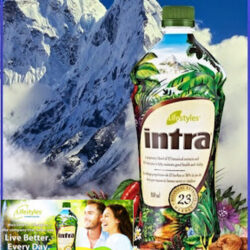
Tip! Use the Intra Herbal Juice 10 minutes before meals with a glass of an infantile water. We recommend long term usage of Intra.
There are several organs that expulse invading toxins from our remarkable organism – the human body. The most important role in this process belongs to the liver, which is responsible for all chemical activity in the body. In particular, it is active in the processing of digested food. The liver makes the most serious “decisions” in food absorption. The most significant and remarkable organ has the capability to regenerate itself. I f we only had half of our liver, it would still be capable of performing all its functions. Read more…
Reduce the amount of salt in your diet.
This tip is for people with high sodium intake and high urine calcium or cystine. Sodium can cause both urine calcium and cystine to be too high. Your health care provider may advise you to avoid foods that have a lot of salt. The Centers for Disease Control (CDC) and other health groups advise not eating more than 2,300 mg of salt per day. The following foods are high in salt and should be eaten in moderation:
Cheese (all types)
Most frozen foods and meats, including salty cured meats, deli meats (cold cuts), hot dogs, bratwurst and sausages
Canned soups and vegetables
Breads, bagels, rolls and baked goods
Salty snacks, like chips and pretzels
Bottled salad dressings and certain breakfast cereals
Pickles and olives
Casseroles, other “mixed” foods, pizza and lasagna
Canned and bottled sauces
Certain condiments, table salt and some spice blends
The main causes of chronic kidney disease are diabetes and high blood pressure, please control them.
Eat the recommended amount of calcium.
If you take calcium and magnesium supplements, make sure you aren’t getting too much calcium. On the other hand make sure you aren’t getting too little calcium and magnesium either. Talk with your health care provider or dietitian about whether you need supplements. Good sources of calcium to choose from often are those low in salt. Eating calcium and magnesium-rich foods or beverages with meals every day is a good habit. There are many non-dairy sources of calcium, such as calcium-fortified non-dairy milks. There are good choices, especially if you avoid dairy.
You can usually get enough calcium from your diet without supplements if you eat three-to-four servings of calcium-rich food. Many foods and beverages have calcium in them. Some foods and beverages that might be easy to include on a daily basis with meals are:
Add Magnesium rich foods
Magnesium is an extremely important mineral. It’s involved in hundreds of chemical reactions in your body and helps you maintain good health. Unfortunately, many people don’t reach the recommended daily intake of 400 mg . However, eating foods high in magnesium can help you meet the daily requirement. Here are 10 healthy foods that are high in magnesium: Dark Chocolate, Nuts, Whole Grains, Fatty Fish( salmon, mackerel and halibut), Avokados, Legumes, Seeds, Tofu, Bananas, Leafy greens.
Eat plenty of fruits and vegetables.
Eating at least five servings of fruits and vegetables daily is recommended for all people who form kidney stones. Eating fruits and vegetables give you potassium, fiber, magnesium, antioxidants, phytate and citrate, all of which may help keep stones from forming. A serving means one piece of fruit or one potato or one cup of raw vegetables. For cooked vegetables, a serving is ½ cup. If you are worried you may not be eating the right amount of fruits and vegetables, talk to your health care provider about what will be best for you.
Eat foods with low oxalate levels.
This recommendation is for patients with high urine oxalate. Eating calcium-rich foods (see table above) with meals can often control the oxalate level in your urine. Urinary oxalate is controlled because eating calcium lowers the oxalate level in your body. But if doing that does not control your urine oxalate, you may be asked to eat less of certain high-oxalate foods. Nearly all plant foods have oxalate, but a few foods contain a lot of it. These include spinach, rhubarb and almonds. It is usually not necessary to completely stop eating foods that contain oxalate. This needs to be determined individually and depends on why your oxalate levels are high in the first place.
Eat less meat.
If you make cystine or calcium oxalate stones and your urine uric acid is high, your health care provider may tell you to eat less animal protein.If your health care provider thinks your diet is increasing your risk for stones, he or she will tell you to eat less meat, fish, seafood, poultry, pork, lamb, mutton and game meat than you eat now. This might mean eating these foods once or twice rather than two or three times a day, fewer times during the week, or eating smaller portions when you do eat them. The amount to limit depends on how much you eat now and how much your diet is affecting your uric acid levels.
Medications
Changing your diet and increasing fluids may not be enough to prevent stones from forming. Your health care provider may give you medications to take to help with this. The type of stone and the urine abnormalities you have will help your health care provider decide if you need medicine and which medicine is best. Common medications include:
Thiazide diuretics
are for patients who have calcium stones and high levels of calcium in their urine. Thiazides lower urine calcium by helping the kidney take calcium out of the urine and put it back in the blood stream. When taking thiazides, you need to limit how much salt you take in, as these medications work best when urine sodium is low.
Potassium citrate
is for patients with calcium stones and low urinary citrate, and for those with uric acid and cystine stones. Potassium citrate makes the urine less acidic or more alkaline (basic). This helps prevent cystine and uric acid stones. It also raises the citrate level in the urine, helping to prevent calcium stones.
Allopurinol
is frequently prescribed for gout, which is caused by high uric acid in the blood. Allopurinol not only lowers the level of uric acid in the blood but also in the urine, so it may also be prescribed to help prevent calcium and uric acid stones.
Acetohydroxamic acid (AHA)
is for patients who produce struvite or infection stones. These stones form because of repeated urinary tract infections (UTI). AHA makes the urine unfavorable for struvite stones to form. The best way to prevent stuvite stones is to prevent repeated UTIs caused by specific types of bacteria and to completely remove the stones with surgery.
Cystine-binding thiol drugs
are used only for patients who form cystine stones. These medications (d-penicillamine or tiopronin) bind to cystine in the urine and form a compound that is less likely than cystine to crystallize in the urine. This drug is used when other measures fail, such as raising fluid intake, reducing salt intake or using potassium citrate.
Vitamin supplements and kidney stones
Yes. They should be used carefully as some can increase your risk of forming kidney stones. Your health care provider and a dietitian may be good sources of information about over-the-counter nutritional supplements.
Our Tip! Use the Intra Herbal Juice 10 minutes before meals with a glass of an infantile water with lemon. We recommend long term usage of Intra, FiberLife, CardioLife and NutriaPlus.
Contains information related to marketing campaigns of the user. These are shared with Google AdWords / Google Ads when the Google Ads and Google Analytics accounts are linked together.
90 days
__utma
ID used to identify users and sessions
2 years after last activity
__utmt
Used to monitor number of Google Analytics server requests
10 minutes
__utmb
Used to distinguish new sessions and visits. This cookie is set when the GA.js javascript library is loaded and there is no existing __utmb cookie. The cookie is updated every time data is sent to the Google Analytics server.
30 minutes after last activity
__utmc
Used only with old Urchin versions of Google Analytics and not with GA.js. Was used to distinguish between new sessions and visits at the end of a session.
End of session (browser)
__utmz
Contains information about the traffic source or campaign that directed user to the website. The cookie is set when the GA.js javascript is loaded and updated when data is sent to the Google Anaytics server
6 months after last activity
__utmv
Contains custom information set by the web developer via the _setCustomVar method in Google Analytics. This cookie is updated every time new data is sent to the Google Analytics server.
2 years after last activity
__utmx
Used to determine whether a user is included in an A / B or Multivariate test.
18 months
_ga
ID used to identify users
2 years
_gali
Used by Google Analytics to determine which links on a page are being clicked
30 seconds
_ga_
ID used to identify users
2 years
_gid
ID used to identify users for 24 hours after last activity
24 hours
_gat
Used to monitor number of Google Analytics server requests when using Google Tag Manager
1 minute
Marketing cookies are used to follow visitors to websites. The intention is to show ads that are relevant and engaging to the individual user.
A video-sharing platform for users to upload, view, and share videos across various genres and topics.
Registers a unique ID on mobile devices to enable tracking based on geographical GPS location.
1 day
VISITOR_INFO1_LIVE
Tries to estimate the users' bandwidth on pages with integrated YouTube videos. Also used for marketing
179 days
PREF
This cookie stores your preferences and other information, in particular preferred language, how many search results you wish to be shown on your page, and whether or not you wish to have Google’s SafeSearch filter turned on.
10 years from set/ update
YSC
Registers a unique ID to keep statistics of what videos from YouTube the user has seen.
Session
DEVICE_INFO
Used to detect if the visitor has accepted the marketing category in the cookie banner. This cookie is necessary for GDPR-compliance of the website.
179 days
LOGIN_INFO
This cookie is used to play YouTube videos embedded on the website.